How Maitland's Subtropical Climate Affects When You Need HVAC Replacement in Maitland
Living in Maitland, we see firsthand how nonstop humidity and long cooling seasons push HVAC systems harder than they were ever designed to run. After years of helping Florida homeowners protect their air and their equipment, we’ve learned that climate—not age alone—is often the real trigger for breakdowns and premature failure. This guide shares our real-world insights into how Maitland’s subtropical conditions accelerate system wear, the early warning signs locals shouldn’t ignore, and how to time HVAC Replacement in Maitland so you get better comfort, stronger efficiency, and fewer costly surprises.
Why Maitland’s Climate Puts Extra Strain on HVAC Systems
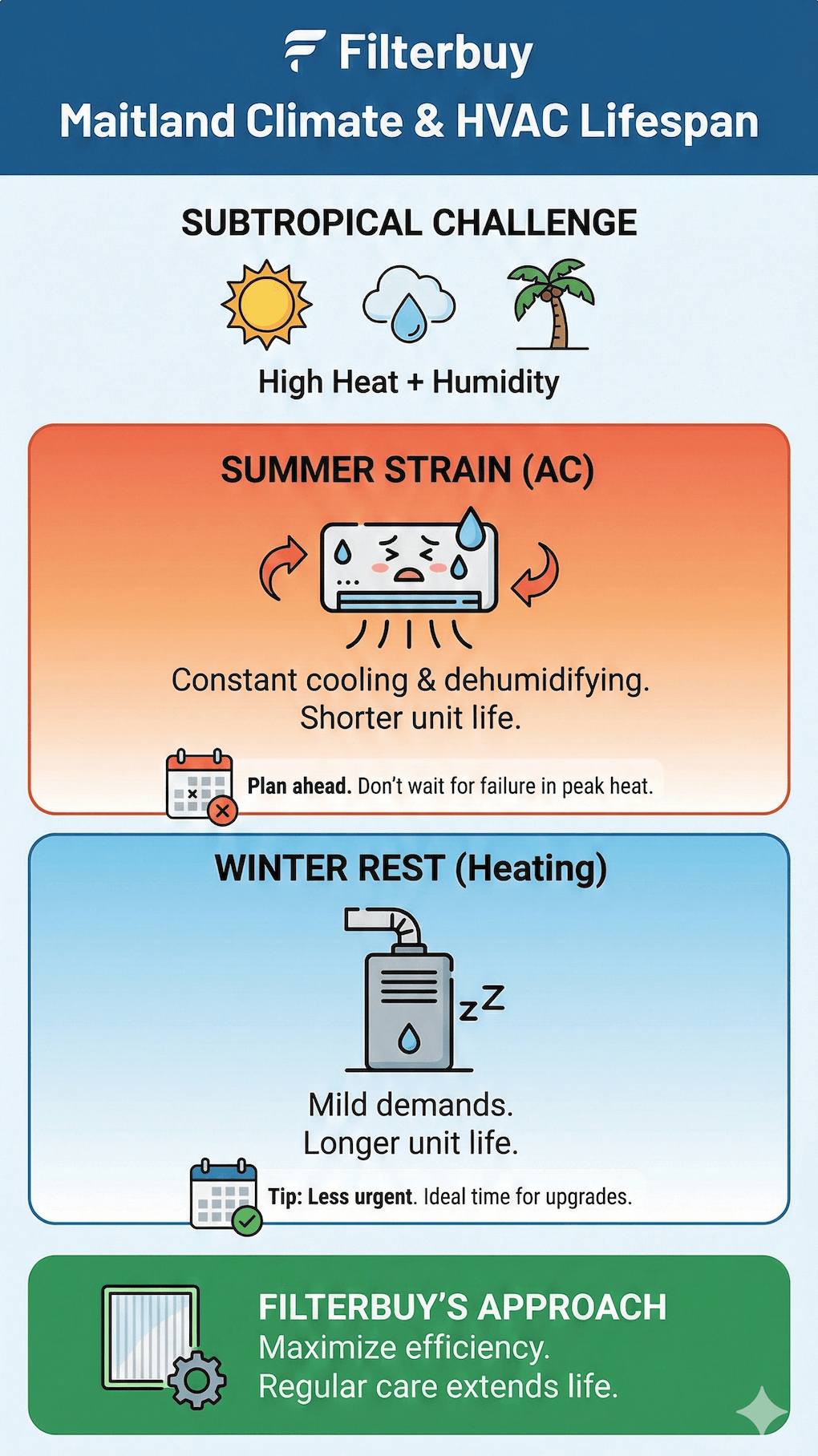
Maitland’s subtropical climate means your HVAC system rarely gets a break. High humidity forces air conditioners to run longer toMaitland’s subtropical climate means your HVAC system rarely gets a break. High humidity forces air conditioners to run longer to remove moisture from the air, while extended cooling seasons cause components like compressors, coils, and blowers to wear out faster than their national averages. From our experience supporting Florida homeowners, we’ve seen systems here lose efficiency years earlier simply because they’re working harder, more often.
How Humidity and Heat Shorten HVAC Lifespan
Constant moisture in the air doesn’t just affect comfort—it accelerates corrosion, encourages mold growth inside the system, and reduces airflow when coils stay damp. Over time, this leads to higher energy bills, inconsistent temperatures, and frequent repairs. In Maitland homes, HVAC systems that might last 15–20 years elsewhere often need replacement closer to the 10–12 year mark if they aren’t properly maintained.
Signs Your System Is Nearing Replacement—Not Just Repair
In subtropical climates, replacement timing is less about age and more about performance. Warning signs we commonly see include longer run times, trouble controlling humidity, rising utility costs, and repeated breakdowns during peak summer months. If repairs are becoming routine and comfort keeps slipping, replacement is often the more reliable and cost-effective choice.
Replacing at the Right Time for Maitland Homes
Planning HVAC replacement before total failure is especially important in Maitland’s heat. Upgrading proactively helps homeowners avoid emergency outages, improves indoor comfort, and allows modern systems to better manage humidity. Pairing a new system with the right air filtration also helps protect your investment by keeping airflow clean and efficient—something we’ve seen make a real difference in long-term system performance.
By understanding how Maitland’s climate impacts HVAC wear, homeowners can make smarter replacement decisions that deliver better comfort, efficiency, and peace of mind year-round.
“After years of helping Florida homeowners manage extreme humidity, we’ve learned that HVAC systems in Maitland don’t fail from age alone—they wear out faster because they’re constantly fighting moisture and heat. When a system can’t keep up with humidity anymore, replacement isn’t a guess—it’s a practical, experience-backed decision.”
Essential Resources on HVAC Replacement in Maitland’s Subtropical Climate
At Filterbuy, we spend every day helping homeowners deal with the real-world effects of heat, humidity, and nonstop HVAC use. If you’re researching when replacement makes sense in Maitland, these expert-backed resources will help you go deeper and make confident decisions.
How Florida’s Climate Shortens HVAC Lifespan
Why it helps: This resource breaks down why Florida systems wear out faster than the national average—something we see firsthand with customers across Central Florida.
What “Normal” HVAC Lifespan Looks Like in Florida
Why it helps: Provides realistic lifespan expectations for HVAC systems in hot, humid regions—so you’re not comparing your system to homes in cooler climates.
Source: https://hvacguideguys.com/how-long-do-hvac-systems-last-in-florida/
Knowing When Replacement Beats Repair
Why it helps: Helps homeowners spot the point where repairs stop making sense—a tipping point we regularly help customers navigate before peak summer hits.
How Heat and Humidity Accelerate HVAC Wear
Why it helps: Explains how Florida weather quietly increases strain on coils, compressors, and airflow—issues we often see tied to poor indoor air quality and system failure.
Why Humidity Control Is a Replacement Red Flag
Why it helps: Shows how excess moisture affects comfort, efficiency, and system health—one of the most common early warning signs we hear from Maitland homeowners.
Clear Signs Your HVAC System Is Near the End
Why it helps: A practical checklist that helps homeowners recognize when declining performance means replacement—not just another service call.
Maintenance vs. Replacement in Central Florida
Why it helps: Explains how maintenance can extend system life—while also helping you recognize when even perfect maintenance can’t overcome Florida’s climate demands.
Filterbuy Pro Tip: If your system struggles with humidity, airflow, or rising energy costs, replacement timing often matters more than age alone. Pairing the right HVAC system with proper air filtration helps protect comfort, efficiency, and your investment—especially in Maitland’s subtropical climate.
Supporting Statistics That Explain Faster HVAC Wear in Maitland
Humidity increases HVAC strain
The U.S. EPA recommends indoor humidity stay below 60%, ideally 30–50%.
In our experience with Florida homes, systems that can’t manage moisture wear out faster—even if they still cool.
Cooling dominates energy use
The U.S. Energy Information Administration reports 52% of household energy use goes to heating and cooling.
In Maitland’s long cooling season, older systems run nearly nonstop, accelerating mechanical wear.
Source: https://www.eia.gov/energyexplained/use-of-energy/homes.php
Aging systems cost more to operate
ENERGY STAR estimates nearly half of the average home’s energy bill—over $900/year— goes to heating and cooling.
We often see older systems cost more to maintain than replacing them with humidity-efficient models.
Source: https://www.energystar.gov/saveathome/heating_cooling
Bottom line: In Maitland’s subtropical climate, HVAC replacement timing is driven by humidity control, runtime, and rising energy costs—not age alone.
Final Thought & Our Take
Maitland’s subtropical climate puts HVAC systems under constant stress. From our experience working with Florida homeowners, systems here don’t simply age—they wear out faster due to nonstop heat and humidity.
What we consistently see in this climate:
Systems running nearly year-round
Declining humidity control before total failure
Rising energy bills tied to longer runtimes
Comfort issues that repairs can’t fully fix
Our opinion:
Waiting for an HVAC system to fail in Maitland usually costs more—in energy, repairs, and lost comfort—than replacing it proactively.
The smarter approach:
Watch performance, not just system age
Plan replacement before peak summer demand
In Maitland, the best HVAC replacement decisions are informed, proactive, and designed for the climate you actually live in—not the one listed in a product manual.
Frequently Asked Questions
Q: Why does Maitland’s climate shorten HVAC lifespan?
A:
Systems run almost year-round.
High humidity adds constant strain.
Key components wear out faster than in cooler climates.
Q: How long do HVAC systems typically last in Maitland?
A:
National average: 15–20 years.
Maitland average: 10–12 years.
Shorter lifespan is driven by heat and moisture, not neglect.
Q: Is humidity more damaging than heat?
A:
Heat increases runtime.
Humidity forces moisture removal.
Poor humidity control often signals replacement sooner.
Q: What signs mean replacement is near?
A:
Rising energy bills.
Longer cooling cycles.
Uneven temperatures.
Ongoing humidity issues.
Frequent repairs.
Q: Why replace before total system failure?
A:
Avoid emergency replacements in peak summer.
Filterbuy HVAC Solutions - Miami, FL - Air Conditioning Service
1300 S Miami Ave Apt 4806 Miami, FL 33130
(305) 306-5027
https://maps.app.goo.gl/Ci1vrL596LhvXKU79